Popular Post
Showing posts with label Elizabeth R. Show all posts

Sugimoto's History Lesson

.


Sugimoto rekindles the dialogue between painting and the medium of mechanical reproduction. Sugimoto isolated wax figures from staged vignettes in waxworks museums, posed them in three-quarter-length view, and illuminated them to create haunting Rembrandt-esque portraits of historical figures, such as Henry VIII, Napoleon Bonaparte, Fidel Castro, and Princess Diana. His painterly renditions, lush with detail, recall the various paintings from which the wax figures were originally drawn. Through layers of reproduction—from subject to painting to wax statue to photograph—these images most consciously convey the collapsing of time and the retelling of history. taken from the Guggenheim here


Arthur Wellsley, Duke of Wellington, 1999. Gelatin silver print, edition 1/5, 58 3/4 x 47 inches (149.2 x 119.4 cm). Solomon R. Guggenheim Museum, New York, Commissioned by Deutsche Bank AG in consultation with the Solomon R. Guggenheim Foundation for the Deutsche Guggenheim, Berlin  2005.104. © Hiroshi Sugimoto


the Duke of Wellington by Robert Home


the WaxWorks at Tussuad's in LONDON

from picasa here


Napoleon Bonaparte, 1999. Gelatin silver print, edition 1/5, 58 3/4 x 47 inches (149.2 x 119.4 cm). Solomon R. Guggenheim Museum, New York, Commissioned by Deutsche Bank AG in consultation with the Solomon R. Guggenheim Foundation for the Deutsche Guggenheim, Berlin  2005.114. © Hiroshi Sugimoto


Napoleon by David


The artist's believes photography is a time machine,  preserving and picturing memory and time.


Jane Seymour, 1999. Gelatin silver print, edition 1/5, 58 3/4 x 47 inches (149.2 x 119.4 cm). Solomon R. Guggenheim Museum, New York, Commissioned by Deutsche Bank AG in consultation with the Solomon R. Guggenheim Foundation for the Deutsche Guggenheim, Berlin  2005.101. © Hiroshi Sugimoto


JANE SEYMOUR

 the Holbein portrait l,   r at Madame Tussuad's in London


Henry VIII, 1999. Gelatin silver print, edition 1/5, 58 3/4 x 47 inches (149.2 x 119.4 cm). Solomon R. Guggenheim Museum, New York, Commissioned by Deutsche Bank AG in consultation with the Solomon R. Guggenheim Foundation for the Deutsche Guggenheim, Berlin  2005.113. © Hiroshi Sugimoto


...putting the Light of the Holbein portraits of Henry and his six wives on the photographs of the Madame Tussuad figures enabled Sugimoto to create a portrait of the period.


 Anne of Cleves, 1999. Gelatin silver print, edition 1/5, 58 3/4 x 47 inches (149.2 x 119.4 cm). Solomon R. Guggenheim Museum, New York, Commissioned by Deutsche Bank AG in consultation with the Solomon R. Guggenheim Foundation for the Deutsche Guggenheim, Berlin  2005.105. © Hiroshi Sugimoto


ANNE of CLEVES
the Holbein portrait at left


 the 6 Wives of Henry the VIII by Sugimoto from historiful here
 Catherine of Aragon, Anne Boleyn, Jane Seymour, Anne of Cleves, Catherine Howard and Catherine Parr.


Sugimoto's ELIZABETH in the home of designer Robert Couturier


 Elizabeth I, 1999. Gelatin silver print, edition 1/5, 58 3/4 x 47 inches (149.2 x 119.4 cm). Solomon R. Guggenheim Museum, New York, Commissioned by Deutsche Bank AG in consultation with the Solomon R. Guggenheim Foundation for the Deutsche Guggenheim, Berlin  2005.111. © Hiroshi Sugimoto


& where would we be without Wilde


Oscar Wilde, 1999. Gelatin silver print, edition 1/5, 58 3/4 x 47 inches (149.2 x 119.4 cm). Solomon R. Guggenheim Museum, New York, Commissioned by Deutsche Bank AG in consultation with the Solomon R. Guggenheim Foundation for the Deutsche Guggenheim, Berlin  2005.89. © Hiroshi Sugimoto


read more at pbs here


.

the tudors

.


.

If one could make alive again for other people some cobwebbed skein of old dead intrigues and breathe breath and character into dead names and stiff portraits.


That is history to me! ~George Macaulay Trevelyan


images top to bottom, from here

Anonymous. Elizabeth I, ca. 1560-65

Nicholas Hilliard (English, ca. 1547-1619), after Hans Holbein the Younger (German, 1497/98-1543) Henry VIII,  from the Bosworth Jewel, ca. 1600.


Nicholas Hilliard (English, ca. 1547-1619), after Guillaume Scrots (Flemish, active 1537-1553). Edward VI, from the Bosworth Jewel, ca. 1600.

Lucas Horenbout (South Netherlandish, ca. 1490-1544). Henry Fitzroy, Duke of Richmond and Somerset, ca. 1533-34

Hans Holbein the Younger (German, 1497/98-1543). (Probably) Katherine Howard, ca. 1540.

Lucas Horenbout (South Netherlandish, ca. 1490-1544). Henry VIII, ca. 1526-27


.

Preen

.


"Youre hawke proynith and not pikith and she prenyth not bot whan she begynnyth at hir leggys, and fetcheth moystour like oyle at hir taill." [ "Book of St. Albans,"  1486]


SONNET XCI
William Shakespeare

Some glory in their birth,ſome in their skill ,
Some in their wealth,ſome in their bodies force,
Some in their garments though new-fangled ill:
Some in their Hawkes and Hounds,ſome in their Horſe.

And euery humor hath his adiunct pleaſure,
Wherein it findes a ioy aboue the reſt,
But theſe perticulers are not my meaſure,
All theſe I better in one generall beſt.
Thy loue is bitter then high birth to me,
Richer then wealth,prouder then garments coſt,
Of more delight then Hawkes or Horſes bee:
And hauing thee,of all mens pride I boaſt.
   Wretched in this alone,that thou maiſt take,
   All this away,and me moſt wretched make.


"to trim, to dress up," late 14c., perhaps a variation of prune (v.),  or from O.Fr. poroindre  "anoint before," and O.Fr. proignier  "round off, prune." O.E. preon  meant "to pin,"
1480–90; late Middle English prene,  variant of Middle English prunen, proynen  perhaps by association with prenen,  to stab, pierce, from the pricking action of a bird's beak in preening


Elizabeth I hawking, 1575.from the "Booke of Faulconrie" by George Turbevile..  
images within this collage are Valentino Fall 2011 from Vogue.com. 


.

the Colours of Elizabeth

.


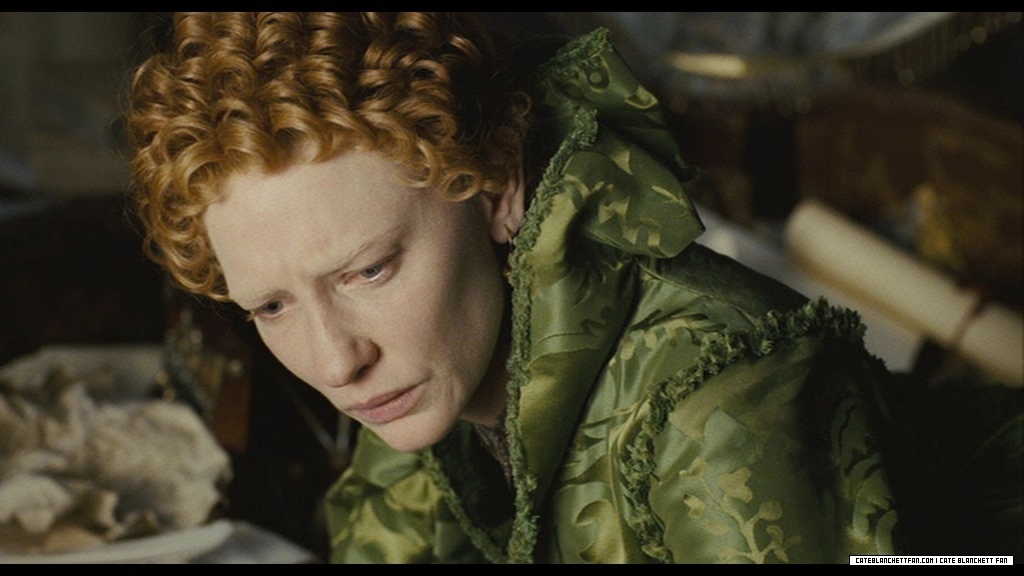
I just watched, for the third time- Elizabeth The Golden Age. I was feeling the need for a costume drama. What I got this time- that Elizabeth- as I have known, I don't get all my information from the cinema, was a kick ass queen. She has to be, perhaps the greatest monarch of all time. Surely there is someone to disagree, and my reasons would not hold up under a contest. What caught my attention-to the point of distraction- was the colour in the costumes Elizabeth-Cate wore.


 The richest most vivid and saturated jewels of colour.


The movie, as are any of her performances, is worth a second, or even third look.

.

in an Elizabethan Garden


"For if delight may provoke men's labour,

what grater delights is than to behold the earth apparalled with plants

as with a robe of imbrodered works,

set with orient pearles
and garnished with great diversitie of rare and costly jewels."


-John Gerard's dedication to Lord Burghley from his book


a beloved book , THE ART OF DRESS Clothes and Society 1500-1914, is the best single source for all things in Fashion. Written by Jane Ashelford and published the National Trust, it is an amazing compendium of scholarly knowledge, but written with the most divine details - little bits about the garments worn and the people that wore them. I've corresponded with Jane and found that the book will be reissued in August. Get yourself a copy, You won't regret it.


I am fascinated by the grand Elizabeth R- and no less fascinating is this glorious dress worn in the portrait by and unknown artist for Hardwick Hall. What fascinates me is the beautiful depictions on the skirt. The Elizabethans used motifs of nature in abundance and the white satin skirt is the piece de resistance of this love of nature.


Elizabeth R
The Hardwick Portrait by Nicholas Hilliard


According to Jane- at one time the skirt was thought to have been painted- now consensus is that the needle was the brush that created this masterpiece. Apparently this garden is embroidered and its intricate stitchery overseen by Bess of Hardwick. Bess is likely to have put her own embroidery skills to work on the fantastical skirt. The costume was a gift for the Queen on New Year's Day. Interestingly- both male and female servants at Hardwick were schooled in the art of embroidery-so it is easy to imagine them with heads bent, working the magnificent white satin into a virtual natural world for the Queen.


Bess of Hardwick


*Satin Gauntlet embroidered with silk and metallic thread, purland spangles, trimmed with silk ribbon and silver-gilt bobbin lace…English c. 1600-1625Fashion in DetailSeventeenth and Eighteenth CenturyAvril Hart and Susan North*

The botanicals and beasts on the garment would have been studied and rendered from the book : The Herball or General Historie of Plants by John Gerard and published in 1597.
(pages from the work below)


the skirt in detail


There are many and most All recognizable animals and floral specimens. The Pansy- one of the flowers depicted- was a favorite with Elizabeth and appeared on many of her clothes. Other specimens: Eglantine Rose, the Iris, Cowslip, Columbine, Strawberry & Pomegranates .


an example of the embroidery of the period.


From the Animal Kingdom: the swallow, crocodile , the spider, moth, crane, the whale, shark, the serpent and a fierce dragon.

What is in your Elizabethan garden?