
.
Another blast of cold weather, with a slight possibility of snow has me feeling cold. I love cold weather in all honesty, but I have found myself adding a layer here and there. It must be my aching bones. My niece gave me a wool challis stole for Christmas and it is close by for a blanketing effect when needed.


Bess always had a fire in her bedchamber at Hardwick hall and kept the room well insulated against draughts and winter chills. "Those large windows, which were so splendid architecturally,, made the house particularly cold and draughty in the winter, especially perched as it was on a hilltop." (excerpted from Mary S Lovell's Bess of Hardwick)

Rather than the opulent silks and velvets which feature in the guestrooms, her bed was a great scarlet-caparisoned tester bed hung with warm bed-curtains of finely woven scarlet wool. The window curtains were also scarlet. And a second pair of bedhangings were kept to be used over the scarlet ones in exceptionally cold weather; when these were all fastened round her bed, it must have been cosy to the point of stuffiness. (Mary Lovell)

Though I could easily envision Bess redecorating the David Hicks room by adding her fine handwork to tapestries all about the room-something like the ones she would have had a hand in. She was a master at the needle.


Born in 1527, Bess learned her excellent skills and management of household from her mother and her aunt, creating a grand yet comfortable world from the time of her marriage to Sir William Cavendish in 1547 until her death. As Lady of Chatsworth and from all of her subsequent titles, she employed embroiderers, seamstresses & lace makers to create the enormously detailed hangings of Hardwick Hall that can still be seen today.


Bess's aging bones evidently felt the cold a good deal, for in her chamber were three coverlets to hang across the two windows and the doors in winter months. Eight warm rugs protected her unshod feet, two great tapestries fifteen foot deep, 'with personages and forest work', hung against the walls. And in addition to the 'featherbed', bolster and pillows, there were twelve warm blankets.(Lovell)


Typical (below) are the Hardwick Hall bedchambers (see National Trust photographs below) that Bess shunned in favor of her scarlet woolen saturated rooms.


Bess died on February 13, 1608, probably age 80 & what a remarkable life. Sadly she would not have seen the spring beauty of Hardwick Hall but gazed on its winter blanket of snow. The scarlet wrapped haven against the cold left to be bathed in dower black.

.
Another blast of cold weather, with a slight possibility of snow has me feeling cold. I love cold weather in all honesty, but I have found myself adding a layer here and there. It must be my aching bones. My niece gave me a wool challis stole for Christmas and it is close by for a blanketing effect when needed.
Horst photograph
How did the likes of Bess of Hardwick manage to stay warm?


Aside from the wearing of fur, (at left)- as a young woman in heavy robes beautifully tipped in fur. Bess as Lady Cavendish, painted by a follower of Eworth, c. 1557. She wears fine jewelry & her fine clothes include a linen smock worked with scarlet, and-( at r.) as the formidable Countess of Shroesbury in ermine, no less.

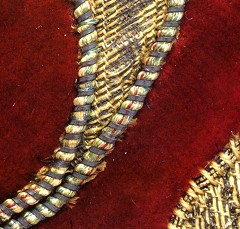
A favored color?
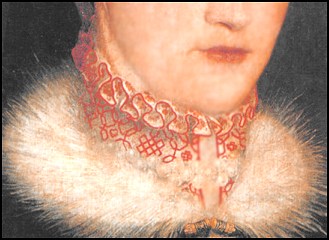
Just imagine a Tudor morning and a driving snow without.

Hardwick Hall
photograph John Gay
Rather than the opulent silks and velvets which feature in the guestrooms, her bed was a great scarlet-caparisoned tester bed hung with warm bed-curtains of finely woven scarlet wool. The window curtains were also scarlet. And a second pair of bedhangings were kept to be used over the scarlet ones in exceptionally cold weather; when these were all fastened round her bed, it must have been cosy to the point of stuffiness. (Mary Lovell)
I immediately thought of the sumptuous bed & room of David Hicks, though the heavy coverings of Bess's scarlets are hardly matched here, I think Hicks captures an out of time quality in this room.

Though I could easily envision Bess redecorating the David Hicks room by adding her fine handwork to tapestries all about the room-something like the ones she would have had a hand in. She was a master at the needle.


Appliquéed heraldic panel, Hardwick Hall, 16th C.
image from here

Appliquéed flowers and bands from a piece at Hardwick Hall, 16th C.
from here

Europa and the Bull
(all needlework images from an Elizabethan Inheritance the Hardwick Hall Textiles)
(all needlework images from an Elizabethan Inheritance the Hardwick Hall Textiles)

an unknown woman by Marcus Gheeraerts
costume is modeled after "Virgo Persica" (the dress of Persian maiden)
from Boissard's Habitus Variarum Orbis Gentium
Bess's aging bones evidently felt the cold a good deal, for in her chamber were three coverlets to hang across the two windows and the doors in winter months. Eight warm rugs protected her unshod feet, two great tapestries fifteen foot deep, 'with personages and forest work', hung against the walls. And in addition to the 'featherbed', bolster and pillows, there were twelve warm blankets.(Lovell)

from an Elizabethan Inheritance the Hardwick Hall Textiles
above & in detail, below


Typical (below) are the Hardwick Hall bedchambers (see National Trust photographs below) that Bess shunned in favor of her scarlet woolen saturated rooms.
Hardwick Hall
Early-eighteenth-century bed in the Green Velvet Room. ©NTPL/Nadia Mackenzie
Early-eighteenth-century bed in the Green Velvet Room. ©NTPL/Nadia Mackenzie

Hardwick Hall
Bed from about 1740 in the Cut Velvet Bedroom. ©NTPL/Nadia Mackenzie

Bed from about 1740 in the Cut Velvet Bedroom. ©NTPL/Nadia Mackenzie
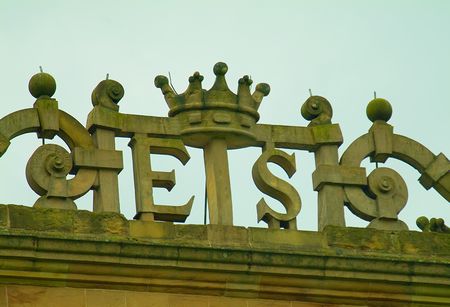
Bess died on February 13, 1608, probably age 80 & what a remarkable life. Sadly she would not have seen the spring beauty of Hardwick Hall but gazed on its winter blanket of snow. The scarlet wrapped haven against the cold left to be bathed in dower black.
'I assure You, there is No Lady in this Land that I better Love & Like.'
-Queen Elizabeth I about Bess of Hardwick

and I think Yes, to the scarlet.
Resources used for this post:
Emile de Bruijn of the National Trust here
stop at Janet Blyberg's JCB to read about Hardwick Hall here
.


